With technological advancements, most hybrid inverter on the market can operate without battery, drawing energy directly from solar panels and converting it into AC power to supply loads.
However, from a user's perspective, in areas with power shortages or unstable power supply, the lack of battery means a lack of energy storage. When there is no solar power at night or insufficient solar energy during the day, there is no source of power.
When the power grid is interrupted, can your home or business still have its lights on and equipment running as usual? Can your solar system continue to provide power? If you only have solar inverter and no battery, where will the power come from in these critical moments? Below, we will analyze the relationship between battery and inverter in depth.
Inverters are indispensable core components in solar system, responsible for converting the direct current (DC) generated by solar panels into alternating current (AC) needed for household and commercial electricity consumption. Solar panels capture solar energy and convert it into electricity through the solar effect, but this electricity is in DC form and cannot directly power everyday appliances such as lighting, refrigerators, and televisions. Inverter bridge the gap between DC and AC.
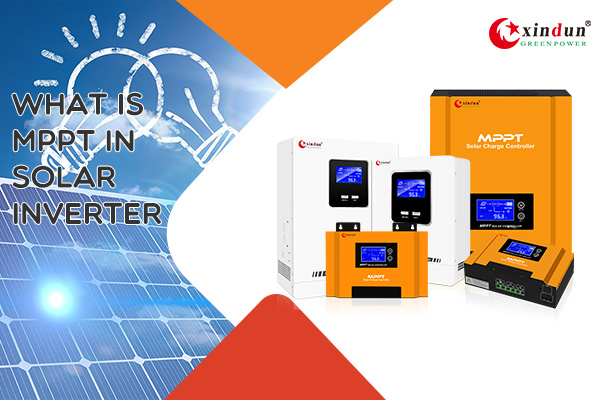
Our inverter utilize maximum power point tracking (MPPT) to capture the maximum power point of solar battery in real time, ensuring maximum utilization of solar energy resources. They also feature automatic operation and shutdown, automatic voltage adjustment, and DC detection, adapting to power fluctuations caused by changes in sunlight and temperature, and ensuring system safety during grid anomalies.
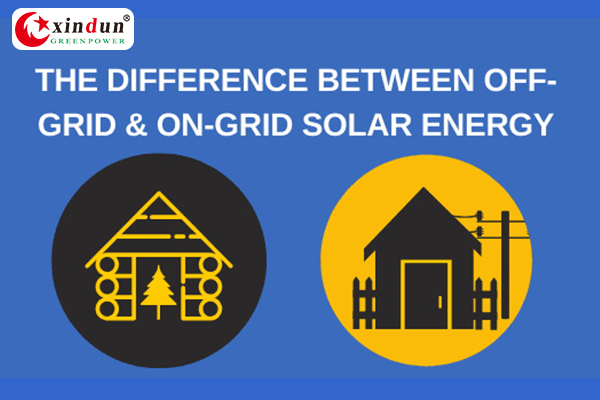
Common inverter is generally classified as off grid inverter, on grid inverter, and hybrid inverter, each applied to different power scenarios. We primarily manufacture off grid inverter and hybrid inverter. So, what are the differences between them?
Off grid inverter
Off grid inverter operate independently, without relying on the power grid, and require batteries for continuous power supply. They directly convert the direct current (DC) generated by photovoltaic (PV) panels into alternating current (AC), while coordinating the battery's charging and discharging logic. In situations with insufficient or no sunlight, they rely on battery energy storage to maintain power supply. They are widely used in remote mountainous areas, RVs, and field work sites.
On grid inverter
On grid inverter is primarily used for solar system connected to the public power grid and do not require battery. Their function is to convert DC into AC that is in phase and frequency with the grid, allowing direct grid connection for home use or sale to the grid company. Excess electricity can be eligible for on grid subsidies. The inverter have high grid compatibility requirements, featuring precise phase synchronization and islanding protection. They can quickly shut down in case of grid failures, avoiding safety hazards for grid maintenance personnel, making them the mainstream choice for urban distributed solar projects.
Hybrid inverter
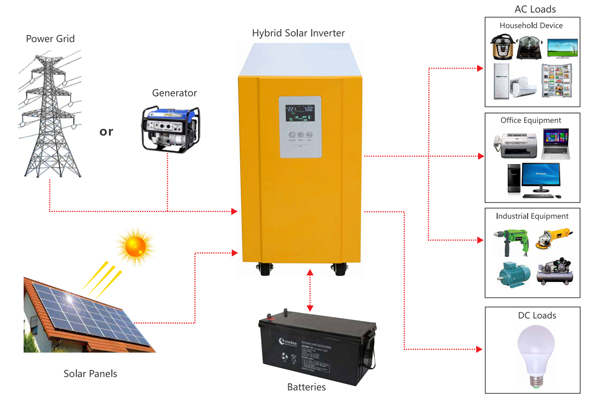
Hybrid inverter combine the functions of off grid and on grid inverter, allowing for flexible switching between operating modes. They support both grid connection of solar power and battery storage of excess energy. When the grid experiences a power outage, they automatically switch to off grid mode, with the battery powering critical loads, achieving self consumption of electricity and grid connection of surplus power. This makes them suitable for homes, shops, and other scenarios that prioritize both energy savings and stable power supply.
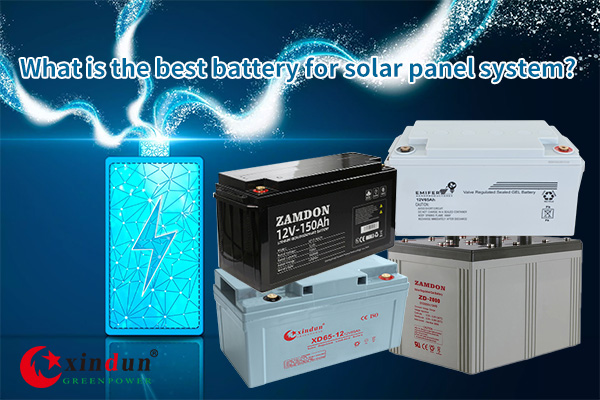
Battery play a crucial role in solar system, ensuring energy storage and supply demand balance. During the day, when solar power generation is high, excess energy can be stored in battery for use at night or during cloudy/rainy weather. It's like equipping the inverter with an adjustable "energy storage tank." Inverter battery is not ordinary energy storage battery, they can undergo deep discharge cycles, providing stable power output during prolonged power outages. Their performance directly determines the inverter system's backup time and operating efficiency.
Common solar battery include lead-acid battery and lithium-ion battery:
Lead-acid battery is larger, heavier, and have lower charge discharge efficiency, typically between 70% and 85%, and relatively shorter cycle life, generally around 300 to 1200 cycles. They are relatively inexpensive, have high market penetration, and are suitable for scenarios with limited budgets or relatively basic energy storage needs.
Lithium-ion battery have higher energy density, and for the same capacity, their volume and weight are only 1/3 to 1/2 that of lead-acid batteries. They offer flexible installation and save space. Long cycle life, with 4000 to 6000 deep charge discharge cycles and lifespan of 5-10 years. High charge discharge efficiency, supporting high current fast charging, with a discharge depth exceeding 95%, resulting in higher energy utilization. It also has no memory effect, allowing for charging without intentionally depleting the battery.
When purchasing the appropriate battery type for solar system, it's necessary to consider the actual system power requirements and budget to maximize battery efficiency.
Battery and inverter are both core components of solar system, working together to form complete "collection-storage-conversion-output" energy chain. The inverter is responsible for energy conversion and system management, while the battery is responsible for energy storage and release. During the day, excess electricity generated by the solar panels is stored in the battery. At night or during power outages, the battery releases the stored direct current (DC), which is then converted into alternating current (AC) by the inverter for home use. In off grid environments, the battery serves as a crucial backup power source, automatically switching power according to the power environment to ensure continuous power supply to the load. Xindun Power's hybrid inverter support both battery powered and batteryless operation. Without battery, the inverter can only rely on solar power or grid power, if either is interrupted, the system will cease to function. We recommend that customers purchase inverter for off grid use, and these should be purchased together with battery.
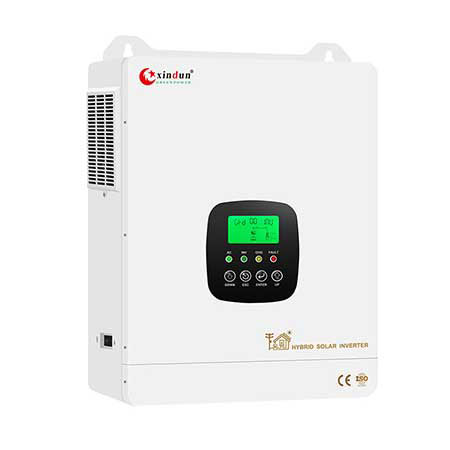
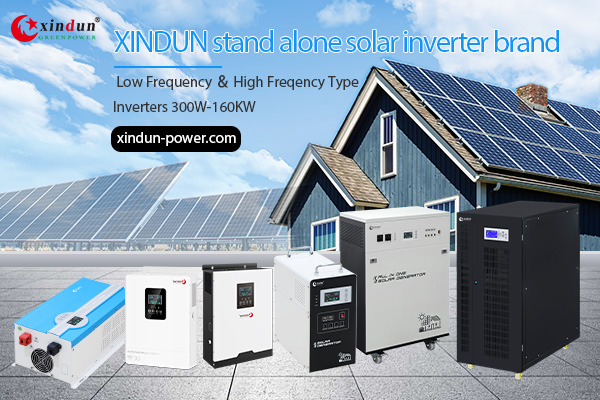
Here are some recommended Xindun hybrid inverter that support batteryless operation:
|
|
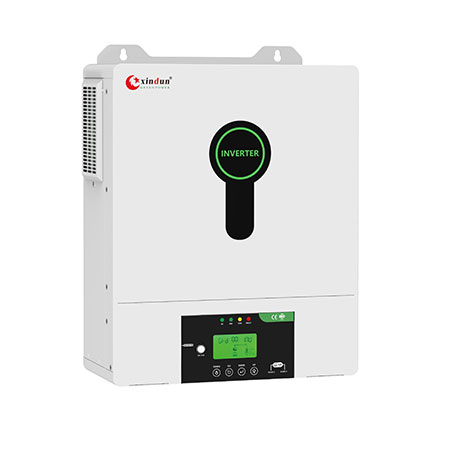
HFP Series Hybrid Inverter 1KW-12.3KW DC 12V/24V/48V to AC 220/230/240V It supports four flexible operating modes: off grid, on grid, hybrid, and batteryless. It built in MPPT solar controller with a PV input voltage range of 30Vdc-500Vdc. |
|
|
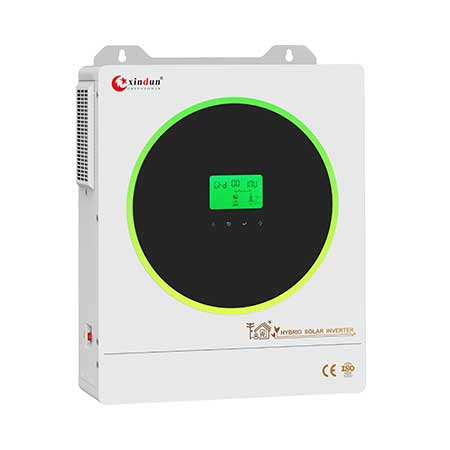
HFP-C Series Hybrid Inverter 4.3KW-12.3KW DC 24V/48V to AC 220/230/240V Featuring ring shaped RGB light strip design, it supports eight freely switchable lighting effects, giving it a modern and stylish look. It also supports dual AC outputs, allowing for simultaneous charging of two different loads. |
|
|
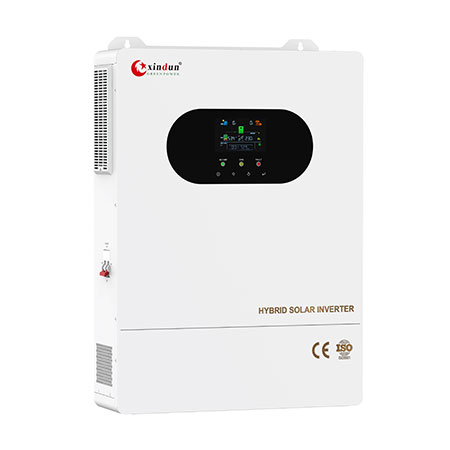
HFP-E Series Hybrid Inverter 3.3KW-12.3KW DC 24V/48V to AC 220/230/240V Featuring remote detachable LCD control panel design, it allows users to assemble it themselves, saving space. It also has dual AC output, enabling simultaneous power supply to both the primary and secondary loads. |
|
|
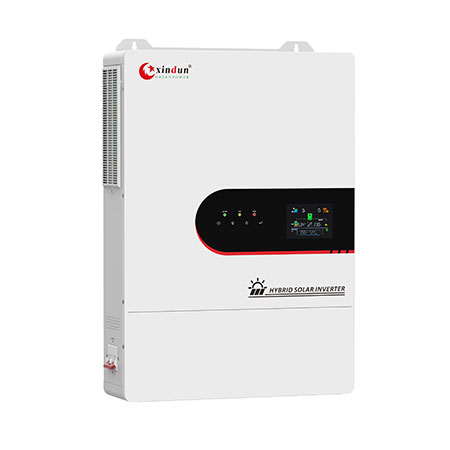
HP PLUS+ Series Parallel Hybrid Inverter 10KW/12KW It features parallel operation capability, supporting up to 6 units in parallel, with power outputs up to 60kW/72kW, suitable for flexible power expansion in different power systems. It also has time of use setting function, allowing users to configure charging and discharging according to their electricity consumption habits. |
|
|
HU Series Split Phase Inverter 10KW/12KW DC 48V to AC L1-N-L (L1-L: 200/210/220/240 V AC; L1-N/L: 100/105/110/120 V AC) It features split phase output and split phase input, as well as US standard single phase output and single phase input functions. Simultaneously, up to 6 units can be operated in parallel, either in single phase or three phase parallel configurations. |
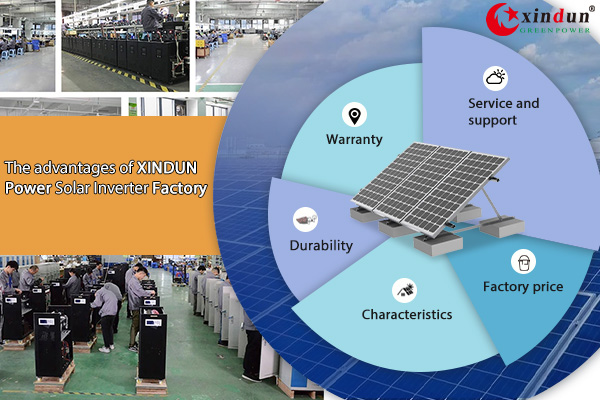
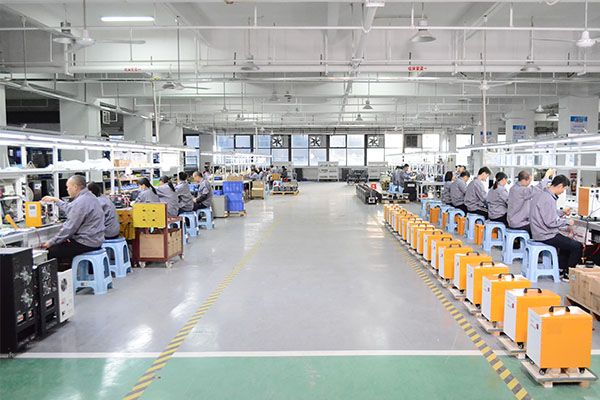
By analyzing inverter and battery, we help customers choose whether to purchase inverter along with battery based on their needs. Xindun Power has been deeply involved in the solar energy field for 21 years, boasting modern production plant of over 12,000 square meters and 12 semi-automated production lines, with daily output exceeding 6,000 units. To help customers accurately match their solar system, we offer a variety of solar products, including inverter, battery, and solar controller. We achieve full process independent control over R&D, production, and testing, avoiding compatibility barriers between different brands. We assist customers in implementing residential, industrial, and commercial projects, ensuring that every user can enjoy stable, efficient, and independent power supply.