Inverter, as core power conversion devices that convert direct current (DC) generated by solar energy or battery into alternating current (AC) for loads, directly impact the operational efficiency and stability of home solar system, off grid system, and energy storage system. Recently, many distributors have reported that customers often fall into a misconception when purchasing inverter: they believe that the higher the inverter's power output, the better, thinking that higher power means stronger power supply and greater ease of use. But is this really the case? Is a bigger inverter always better? Xindun Power will discuss the impact of overly big inverter and help customers choose the right inverter to optimize both efficiency and cost.
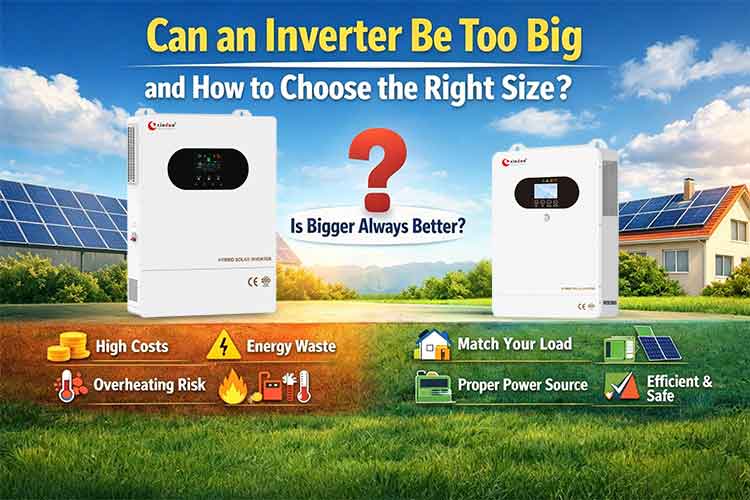
Many customers fall into the misconception that the bigger the inverter, the better when purchasing one. They believe that choosing bigger power inverter will provide sufficient power reserve for future additions to electrical equipment, avoiding the need to replace the inverter later due to increased power demand and saving on secondary investment costs. This "foresight" is not inherently wrong, but it overlooks the compatibility of the inverter's power output with the entire power supply system, such as battery and solar panel. Blindly pursuing big power can be counterproductive.
When motor driven equipment such as air conditioners, refrigerators, and water pumps start up, they generate peak currents that far exceed the rated power, typically three times the rated power. Customers worry that inverter with low power ratings cannot handle such instantaneous loads, causing the equipment to fail to start or the inverter to be damaged. As a result, they choose big power inverter that far exceed their actual needs, believing that this will solve the peak load problem "once and for all." However, they do not realize that there is a reasonable range for the peak power of inverter, and that excessively big inverter itself does not improve the peak power supply capacity of the system. The key lies in matching it with the battery and the load.
At the same time, many customers lack knowledge about inverter power, efficiency, and matching when making purchases. They see people around them choosing big power inverter or are influenced by one sided propaganda that "bigger power is more stable," so they blindly follow the trend, mistakenly believing that the bigger the power, the better the product quality and performance, while ignoring their own actual electricity needs.
Many customers mistakenly believe that "big power inverter just cost more money," but in reality, excessive inverter power not only wastes costs but also affects the stability, efficiency, and lifespan of the entire power supply system, and may even pose safety hazards.
Energy waste and increased operating costs. Inverter themselves generate energy losses during operation, which are directly related to their efficiency. Big power inverter typically experience higher losses than low power inverter. Even with a small actual load, big power inverter still need to maintain the normal operation of their internal electronic components and cooling system, consuming more electrical energy—this is known as "no load loss." For example, a 10kW inverter that only drives a 2kW load will have significantly higher no-load and operating losses than a 2-3kW inverter. Over the long term, this results in substantial energy waste and increased electricity costs. Furthermore, industry data shows that over 60% of inverter failures stem from improper power matching. A long term mismatch between big power inverter and small load further exacerbates losses and shortens equipment lifespan.
System mismatch leads to decreased stability. The inverter's power output needs to match the capacity of the DC (battery, solar panel) and the load power to ensure stable system operation. If the inverter's power is too high, while the battery capacity or solar panel output power is insufficient, a system mismatch occurs. The inverter cannot obtain enough DC input power and cannot fully utilize its rated power, resulting in unstable output voltage and current fluctuations. This affects the normal operation of electrical equipment and may even trigger the inverter's overcurrent and undervoltage protection, causing frequent equipment shutdowns. For example, a 10kW inverter paired with 5kWh battery and 2kW solar panel will result in intermittent power supply and malfunction if the battery cannot provide sufficient discharge power and the solar panel cannot meet the inverter's input requirements, ultimately leading to unusable equipment.
Increased heat dissipation pressure poses safety hazards. Inverters generate heat during operation; the higher the power, the more heat is generated, placing higher demands on the cooling system. If the inverter's power is too big while the actual load is low, the cooling system's efficiency cannot match the power, leading to heat buildup. Prolonged exposure to high temperatures accelerates the aging of internal electronic components, reduces equipment lifespan, and in severe cases, may cause short circuits, overloads, and other malfunctions, posing safety hazards such as fires and electric shocks. Under high temperatures, inverter efficiency further decreases. Tests show that a 5000W inverter experiences an efficiency drop of ≤3% at 40℃, while big power inverter experience more significant efficiency drop when heat dissipation is inadequate, further exacerbating energy waste.
Increased initial investment costs. Big power inverters are significantly more expensive than their counterparts in the same category of low power inverter. Blindly choosing big power inverter will directly increase initial purchase costs, resulting in wasted funds. More importantly, for ordinary households, small shops, or field operations, the excess power of big power inverter is completely unused, essentially paying a higher price for "functionality that is not needed," thus reducing cost effectiveness. Furthermore, big power inverters are larger and heavier, increasing installation costs and space requirements, which is extremely inconvenient in space constrained environments.
When purchasing an inverter, the selection should be based on load needs. A systematic assessment of the load is necessary, including calculating the rated power of all loads and considering the utilization factor. At the same time, it's crucial to be wary of issues such as inaccurate power ratings and ensure the product parameters are accurate and reliable. For example, a 3000W home solar system may only be used at 60%–70% capacity in actual operation. Adding a 20%–30% redundancy margin is usually sufficient to meet daily needs and ensure system stability.
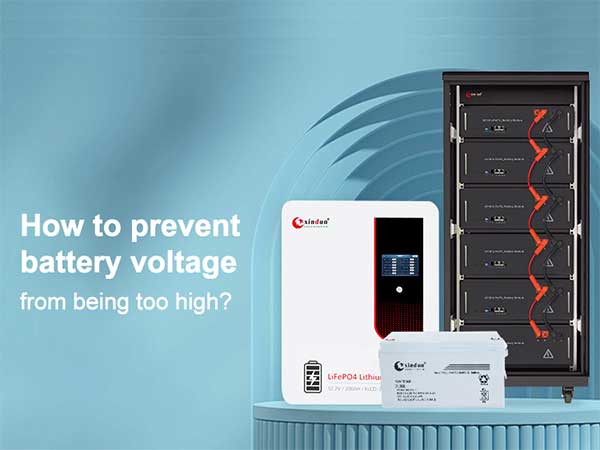
The inverter's input voltage and power must match the parameters of the solar panels and batteries to avoid incompatibility. For solar system, the inverter's MPPT voltage range should cover the solar panel's operating voltage ±15% to avoid peak clipping. Simultaneously, the total power of the solar panels can be appropriately over supplied by 10%-20% to compensate for module degradation and improve power generation efficiency. For battery backup system, the battery voltage must match the inverter's nominal voltage (e.g., 12V, 24V, 48V), and the battery's rated discharge power should not be lower than the inverter's rated input power to prevent battery overload damage and extend battery life.
The power requirements for inverter vary significantly across different scenarios. Residential applications primarily handle stable loads, so excessive capacity expansion should be avoided. Commercial and industrial applications experience greater load fluctuations, allowing for increased capacity to handle peak demand. Off grid system prioritize power reliability, typically requiring increased redundancy within reasonable limits, along with sufficient battery capacity to cover nighttime power needs. Furthermore, if future expansion plans exist, some power headroom can be reserved, but excessive upfront configuration should be avoided to prevent long term efficiency degradation and cost waste. Xindun Power's HP PLU+ series hybrid solar inverter (10kW/12kW) support parallel expansion, allowing flexible expansion based on project phases and power demands. Up to 6 units can be connected in parallel (single phase/three phase), achieving total power of 60kW/72kW, making them suitable for users with future expansion plans.
Choosing an inverter isn't about "bigger is better," but rather about striking a balance between performance, efficiency, and cost. Xindun Power recommends selecting an inverter that can stably power all electrical equipment, reduce energy consumption, extend lifespan, and save on initial investment and long term operating costs. As a manufacturer with 21 years of professional inverter experience, all our inverters undergo rigorous testing and performance verification to ensure stable output and reliable parameters. If you're unsure how to choose or if your solar project is in a complex electrical environment, Xindun Power can provide professional advice and 1V1 customized services.