Is it good for PV power generation to be close to the inverter's max PV input power? In configuring PV power system, the matching degree between the PV panel's output power and the inverter's PV input power directly affects the system's stability, power generation, and equipment lifespan, making it a core concern for many users. Many mistakenly believe that "the closer the PV output power is to the inverter's max PV input power, the higher the power generation efficiency," but this is not the case, this critical matching state is not the optimal solution and actually poses several hidden dangers. Xindun Power recommends a matching method where the PV output power is slightly lower than the inverter's maxi PV input power. This approach ensures more stable and durable system with higher return.
As the "energy converter" of PV power system, the inverter's max DC input power is the upper limit that the hardware can withstand, not the optimal operating threshold. When the PV power generation approaches this upper limit, the system is in critical matching state—seemingly achieving "full power generation," but in reality, the disadvantages outweigh the advantages. Xindun Power will explain the specific hidden dangers from the following aspects.
The output power of PV panels is greatly affected by environmental factors such as sunlight and temperature, fluctuating frequently and potentially significantly. When the PV power approaches the inverter's max PV input power, extreme conditions such as sudden increase in sunlight or low temperatures can cause the PV panel's open, circuit voltage and operating current to rise, easily exceeding the inverter's DC voltage and current tolerance. In this situation, to protect its components, the inverter will automatically activate power limiting mode or even shut down, resulting in a significant decrease in power generation during peak daytime sunlight hours, ultimately leading to more harm than good. This is especially true in low temperature, high altitude regions, where low temperatures increase PV panel voltage, greatly increasing the probability of this protection triggering and severely impacting normal system operation.
A mature PV power system design must include reasonable safety redundancy to cope with various uncontrollable factors. PV panels experience power degradation over long term use, with annual degradation rate of approximately 0.5%-2%. Furthermore, line losses, dust accumulation, and minor differences between modules can also lead to reduction in actual power generation. If the PV power generation is at critical mismatch with the inverter's max DC input power, there is no margin to handle these situations. Once anomaly occurs, the inverter will be unable to operate at full capacity, and over time, the accumulated loss of power generation can be substantial.
Even if the PV power generation is consistently close to the inverter's max PV input power, the instantaneous power during peak periods may briefly exceed the inverter's rated value, causing the inverter to operate under high load and high heat for extended periods. Under high temperature and high load conditions, the core components of the inverter age faster, not only shortening the inverter's lifespan but also increasing the probability of equipment failure and raising subsequent maintenance costs. Since the inverter is the core equipment of PV power system, its stability directly determines the entire system's lifespan; blindly pursuing "near full power generation" will ultimately be counterproductive.
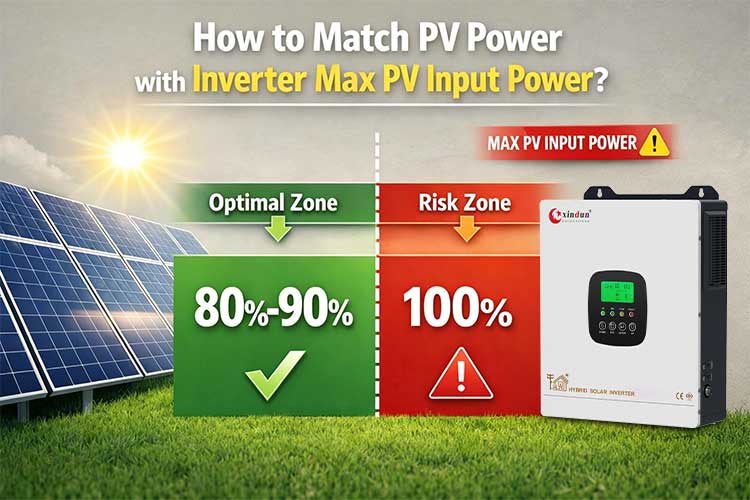
Inverter efficiency is not constant. It operates most efficiently at 80%-90% load, decreasing as it approaches full load. Inverters have two core power parameters: max PV input power (hardware limit) and rated AC output power (core operating parameter). During design, the rated AC output power should be prioritized for matching. If the PV power approaches the inverter's max DC input power, it will cause a decrease in the efficiency of the inverter's built in MPPT controller, preventing it from fully utilizing the module's power generation potential and impacting the overall system power generation efficiency.
It's important to note that if the PV power output exceeds the inverter's max PV input power, it constitutes a serious power mismatch problem. This not only causes the inverter to enter power limited operation state but may also damage DC side components due to excessive DC current and voltage, resulting in unnecessary economic losses. While it may seem like "full power generation" when the PV power output is close to the inverter's max PV input power, it actually leads to a series of problems such as power generation loss, shortened equipment lifespan, and system instability. Maintaining the PV power output at 80%-90% of the inverter's max PV input power is the optimal solution. This maximizes the power generation capacity of the PV panels while ensuring long term stable system operation.