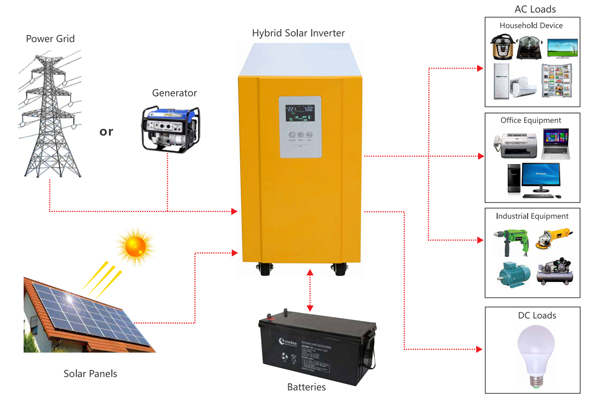
Happy New Year everyone! Xindun Power wishes you all a happy life in 2026, and we will continue to provide you with a continuous source of energy for your wonderful lives.
In this episode, we'll discussion on the inverter to battery ratio. Recently, Recent feedback from customers and our distributors: When the inverter and lithium battery are working together, the inverter keeps switching between standby mode and battery priority output mode. What's causing this?
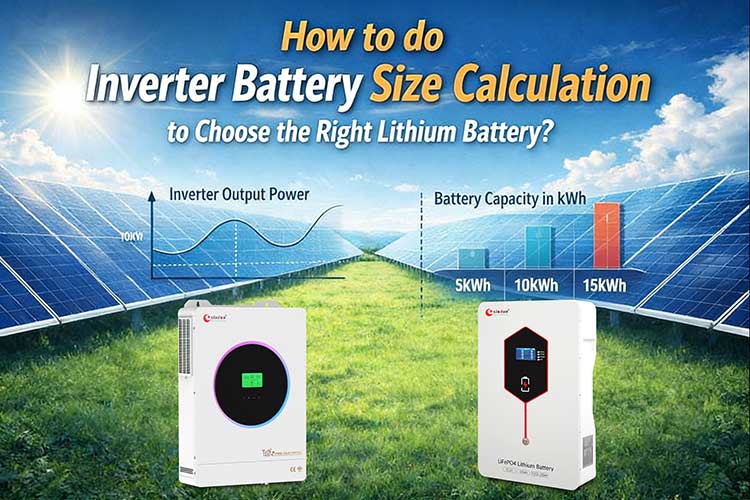
We discussed this issue with our engineering team, and the conclusion is that the customer's lithium battery pack is too small. For example, for a 5KW inverter, Xindun Power recommends a 10kWh or 15kWh lithium battery. Because lithium battery experience a sudden drop in voltage just before they are depleted, if the battery capacity is too small. For example, only half the inverter's output power the inverter communicates with the lithium battery and receives a signal that the battery voltage has reached its minimum value. It then stops supplying power to the load. Simultaneously, as the battery stops discharging, its voltage suddenly recovers to its normal value. The inverter, in this situation, receives another signal from the battery: the battery voltage has recovered. It then resumes supplying power to the load, causing the battery voltage to drop to its minimum value second time. This cycle repeats, causing the inverter to constantly switch between standby mode and battery priority output mode.
We recommends that the battery capacity be 2-3 times the inverter's output power. This way, even when the battery voltage reaches a relatively low value, the larger battery capacity allows for a greater output power to the inverter, preventing the aforementioned vicious cycle.
Another advantage of using a larger battery capacity is that when the battery is nearly depleted but the inverter is still operating under a heavy load, small capacity lithium battery, with its voltage already very low, will increase its discharge current to maintain the required power, potentially even outputting excessive current to the inverter. In this situation, the inverter's power board is very likely to burn out. This is why some customers say: "I was just using the inverter normally, but it suddenly broke down."
We also tell you that using a sufficiently large capacity lithium battery will prevent this problem.
So what battery capacity is needed to make it usable? We will teach you a simple inverter battery size calculation trick: Battery backup time at night is approximately 6-8 hours. Based on this rule, we suggest that the battery capacity should be 1-2 times the inverter's output power.
For example, a 1KW 12V inverter might consider 12.8V 100Ah or 200Ah lithium battery. A 3KW 24V inverter could use 25.6V 200Ah battery, and a 10KW 48V inverter could use 51.2V 300Ah or 400Ah lithium battery.
Of course, the most important thing is to decide on the battery size according to your budget, as batteries are not cheap.
If you have any questions, feel free to contact us and we’re always online.