Today I'll be talking about a product that everyone is very interested in and wants to understand: lithium battery.
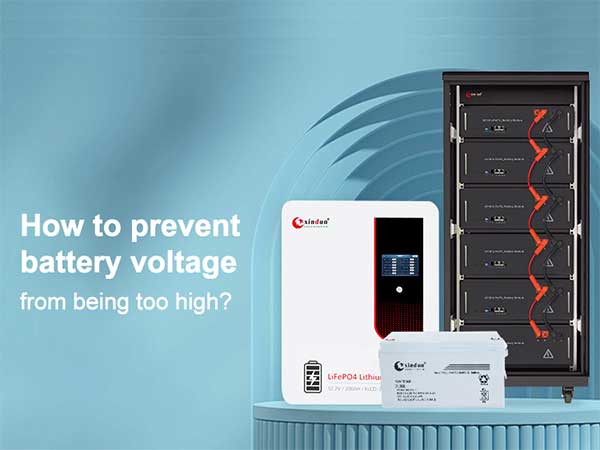
As a replacement for lead-acid battery, lithium battery have many advantages, and choosing lithium battery has become the preferred choice for off grid and energy storage systems. However, users have also found that lithium battery seem quite "unpredictable," often feeling difficult to manage: at an ambient temperature of 20℃, lithium battery work smoothly, but in cold weather, the BMS protection suddenly kicks in, causing them to stop working. So, how can we manage this high performance lithium battery?
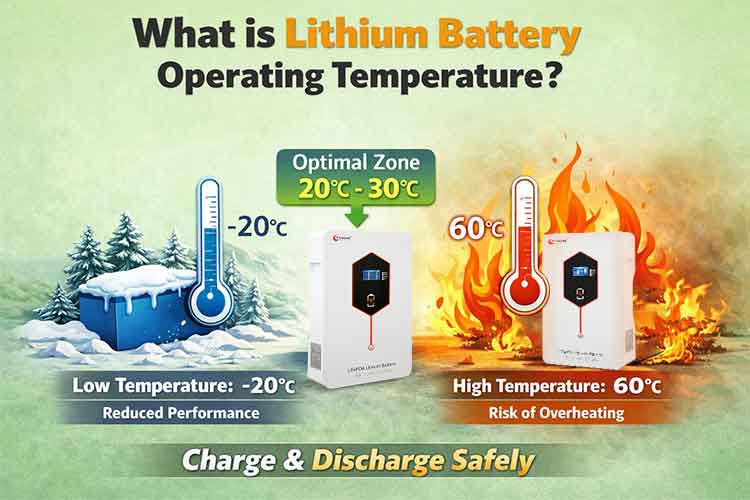
First, let's talk about the operating temperature of lithium battery.
Lithium battery is very sensitive to temperature, being both cold and hot. Their operating temperature is not a fixed value, but varies depending on the charge/discharge state.
1. Optimal Operating and Charge/Discharge Temperatures for Lithium Battery
Ideal Range: 20℃~30℃. This is the optimal balance point between lithium battery performance and lifespan. Therefore, Xindun Power recommends that users place lithium battery in air conditioned rooms in hot climates, and wrap them in insulation material in cold climates to ensure normal operation.
2. Discharge temperature: -20℃~60℃. Although discharge is possible within this range, lithium battery performance will significantly decrease below 0℃.
3. Charging temperature: 0℃~55℃. Charging lithium battery at low temperatures is extremely harmful. 0℃ is the red line for charging (some high quality lithium battery can reach -10℃ or -20℃). Charging below this temperature will cause lithium plating, i.e., the growth of lithium dendrites. This may puncture the separator, causing permanent damage or even short circuits and fires.
The harmful effects of extreme temperatures on lithium battery.
Low temperature effects: When the temperature is below 0°C, the electrolyte thickens and the internal resistance increases, and the usable capacity will "temporarily" decrease (e.g., only about 70% remains at -10°C), but the lithium battery capacity will recover after the temperature rises.
High temperature effects: Above 40℃, side reactions are accelerated, accelerating capacity decay. Studies show that above 40°C, for every 10°C increase, the cycle life of lithium battery may be halved. Temperatures exceeding 60°C may cause lithium battery to swell.
The mainstream lithium battery on the market is the lithium iron phosphate battery, which has the best thermal stability, but its low temperature performance is relatively poor.
The non mainstream ternary lithium battery has high energy density, but is more sensitive to high temperatures (it may decompose at around 200°C). Its low temperature performance is better than that of the earlier lithium iron phosphate battery.
If you would like to learn more, please follow Xindun Power and our website(https://www.xindun-power.com/). You will receive more unique and useful information from us.