Over the past decade, solar power generation has rapidly gained popularity worldwide. Rising electricity prices, grid instability, and the need for power independence have led more and more households and businesses to install solar system.
With surging market demand, Xindun Power has received feedback from many distributors: in rural areas, remote mountainous regions, and some developing areas where knowledge of new energy is relatively scarce, many customers are generally confused about the operating modes of inverter after installation and use. Users frequently ask questions such as "Does the inverter need to be kept on all the time?" and "Will long term operation damage the inverter?" Xindun Power will provide answers from professional perspective.

Inverter acts as the energy management and control center of solar system. As a power conversion device, it converts the direct current (DC) generated by solar panels into alternating current (AC) for the load. The electricity generated by solar panels is inherently unstable, fluctuating with changes in sunlight intensity, temperature, and load. The inverter needs to monitor these changes in real time, adjusting voltage, current, and frequency to ensure a safe and stable supply of power to residential or commercial equipment. This process is not reactive but continuous, dynamic control. Without the efficient operation of inverter, the electricity generated by solar panels cannot be effectively utilized, and the value of the entire solar system will be significantly reduced.
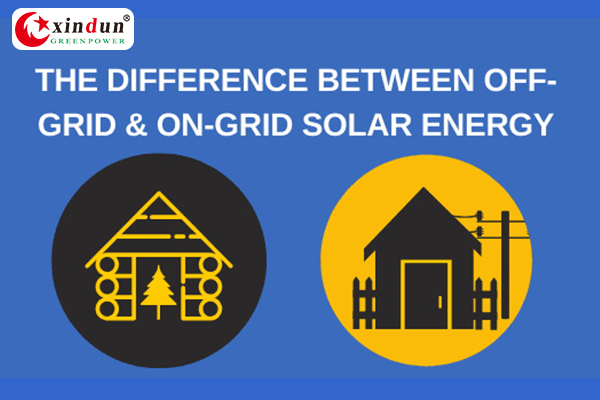
Common inverter is classified into off grid inverter, on grid inverter, and hybrid inverter. So, in different types of solar system, should the inverter be kept constantly on?
Off grid Inverter: Long Term Operation Recommended
Off grid inverter operate completely independently of the public power grid. They are primarily used in remote areas without grid coverage and in areas with unstable grids. They need to be used in conjunction with battery to provide continuous power to the load. We recommend that the inverter be kept on for extended periods. Firstly, off grid system rely on battery energy storage. Continuous inverter operation allows for real time monitoring of battery status, preventing damage such as overcharging or over discharging, while maintaining the battery in a float charge state to ensure immediate power supply during sudden power outages. Secondly, household appliances and communication equipment in remote areas often require 24 hour power support. Frequent inverter starts and stops can lead to power outages, and the current surge during each startup may shorten equipment lifespan. However, it should be noted that if you are away from home for more than a week without necessary loads, you can turn off the inverter and fully charge the battery to avoid wasting standby power.
On grid inverter: Selectable on demand, no mandatory constant operation required.
On grid inverter is suitable for areas with high grid coverage. They directly feed electricity into the public grid without the need for battery. If the local grid is stable, electricity prices are low, and the user has no backup power demand, the inverter can be turned off when not generating electricity, such as at night, to reduce standby power consumption, typically 5-10W per hour, although some losses will still accumulate over time. However, if the user wants to maximize the use of solar power generation, such as during low light periods in the early morning or evening, or when the local grid experiences frequent power outages, it is recommended to keep it on so that it can generate electricity and connect to the grid immediately when there is sufficient sunlight, while avoiding wear and tear on internal components from frequent start stop cycles. It is important to note that when the on grid inverter is on, the grid connection must be normal, otherwise, the islanding protection function will be triggered, and the inverter will automatically shut down without manual intervention.
Hybrid Inverter: Recommended for 24/7 Operation
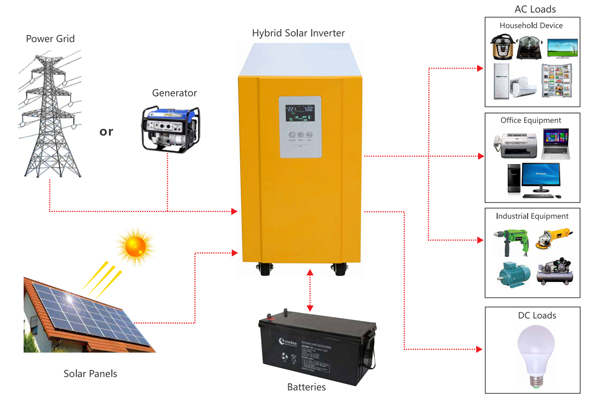
Hybrid inverter combine on grid and off grid capabilities, flexibly switching between off grid, on grid, and hybrid power supply modes, making them the preferred choice for home energy storage system. When sunlight is abundant, they prioritize solar power and battery charging. When solar power is insufficient, they can draw power from the battery or mains electricity. In the event of mains power outage, they automatically switch to off grid mode, powering critical loads via battery. Xindun Power recommends that hybrid inverter be kept on 24/7. Firstly, hybrid inverter need to continuously manage battery charging and discharging, even at night without sunlight, they can charge the battery using off peak electricity rates or switch to battery power immediately during grid outages, achieving seamless operation. Secondly, frequently shutting down the hybrid inverter can lead to a loss of system monitoring, making it impossible to detect battery anomalies or grid fluctuations in a timely manner. Furthermore, restarting requires reinitialization, potentially missing the morning's peak solar power generation. Our multiple tests have verified that hybrid inverters paired with battery offer longer battery life, higher system efficiency, and avoid power loss due to forgetting to turn them on.
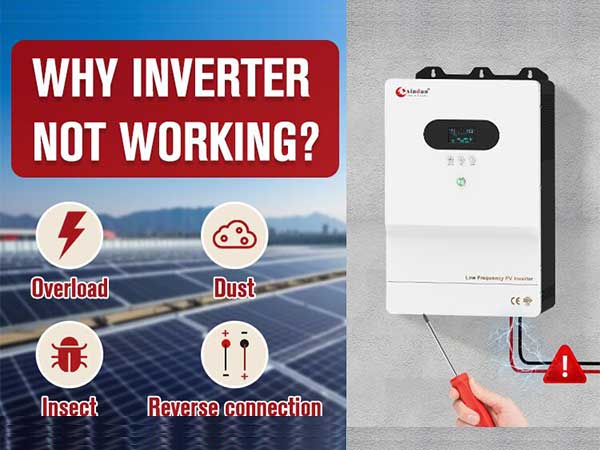
Many people worry that leaving appliances running continuously will cause excessive wear and tear and shorten their lifespan. In fact, the key factor affecting inverter lifespan is not "running time," but rather the operating environment and operating method. The lifespan of an inverter is mainly determined by its internal electronic components, such as electrolytic capacitors, IGBTs, and cooling fans. Among these, electrolytic capacitors are the critical bottleneck affecting lifespan; for every 10°C increase in ambient temperature, the lifespan of electrolytic capacitor may be halved. However, the temperature accumulation during normal operation is not the main threat, improper use is the core risk. Xindun Power inverter typically have a lifespan of 2-3 years and are capable of long term operation. Our inverters adhere to extremely high standards in component selection and reliability testing during research and development and production, ensuring long-term stable operation. As long as the installation environment is well ventilated, avoiding direct sunlight and overheating caused by enclosed spaces, regularly cleaning dust to prevent poor heat dissipation and component aging, and minimizing grid impact to avoid additional burdens caused by voltage fluctuations and harmonic interference, the inverter's lifespan can reach over 10 years. Under these conditions, keeping it constantly on will not shorten its lifespan.
On the contrary, frequent start ups and shutdowns of the inverter may cause greater damage. The current surge during each start up will exacerbate the wear and tear on components such as IGBTs and relays. After long term shutdown, the battery may become sulfated due to self discharge, which is particularly noticeable in lead-acid battery, thus affecting the overall lifespan of the system.
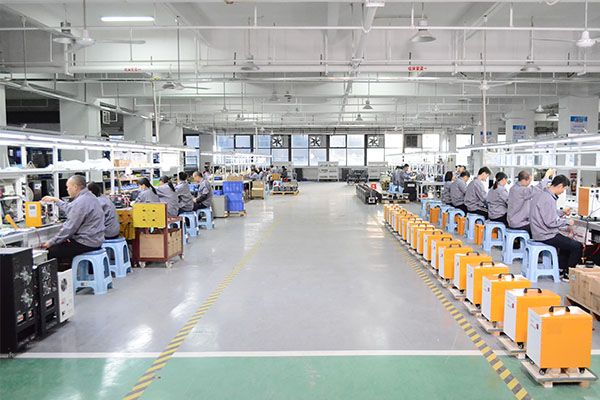
As a professional inverter manufacturer, Xindun Power has a professional R&D team that focuses not only on developing inverters that meet the power demands of the global solar market, but also on providing professional usage guidance and technical support based on user experience. Proper use of inverters can efficiently utilize solar power generation. In these situations, we recommend turning off the inverter:
In cases of prolonged unattended operation. If the user is away from home for more than one week and the system has no load requiring continuous power supply, it is recommended to turn off the inverter. This avoids wasting battery power during standby and reduces safety risks when unattended. Before turning off, fully charge the battery and disconnect the inverter from the battery. Turn off the inverter first, then disconnect the positive and negative terminals to prevent short circuits.
During system maintenance or malfunctions. When performing maintenance operations such as cleaning solar panels, repairing the inverter, or replacing battery, the inverter must be turned off to avoid the risk of electric shock. If the inverter displays fault indicators, such as over temperature alarms or abnormal current, it should be stopped immediately for inspection. Continued operation may expand the scope of the fault.
In extreme environments, such as continuous high temperatures exceeding 40°C without effective heat dissipation, flooding due to torrential rain, or natural disasters like strong typhoons, it is recommended to shut down the inverter and take appropriate protective measures. Extreme environments can accelerate component aging and even cause short circuits or burnouts; shutting down the equipment is the safest option in such situations.
The above answers the question of “Should I leave my inverter on all the time”. For regions with limited inverter knowledge, Xindun Power will regularly provide technical training and usage guidance to distributors, helping them better support customers and optimize the intelligent functions of inverters to make operation and maintenance simpler and easier to understand. If you still have any questions about selection, installation, operation, or daily maintenance, or if you need more personalized system design and suggestions, please feel free to contact Xindun Power's professional team.